
Office of Student Opportunity, Access and Engagement
Welcome to the Office of Student Opportunity, Access and Engagement
Guided by the principles of peace, non-violence, social justice, and human dignity, the Office of Student Opportunity, Access and Engagement works in partnership with students, faculty, staff, and the broader community to ensure that every student has the opportunity to learn, grow, and contribute meaningfully.
At Etown, we are committed to honest reflection, active engagement, and sustained progress. Our efforts are not only about addressing challenges but also about building pathways toward a more just and connected learning environment.

Important Resources
Bias Incident Reporting
The College's Bias Incident Form remains a resource to report incidents involving conscious or unconscious bias toward a person or group's perceived identity, including but not limited to race, ethnicity, gender identity, sexual orientation, religion, etc.
Report a Bias IncidentNavigating Change Form
The campus community can complete the Navigating Change Form to submit questions and concerns so that resources can be offered based on the nature of the concern. This form is not an incident reporting form.
Complete the Navigating Change FormCampus Support & Resources
Services and Initiatives
- Campus Programming & Engagement
- Coordinate educational and awareness-building initiatives throughout the year.
- Facilitate cultural and social programs that promote ethical leadership and meaningful dialogue.
Student Support & Mentorship
- Provide mentorship, advocacy, and leadership development for students.
- Oversee the Ubuntu Mentorship Program, ensuring first-year students receive guidance and support in their transition to college life.
- Administer the Mosaic Scholar Program, fostering academic success and engagement.
Student Organizations & Leadership Development
- Actively collaborate with the Intercultural Board, a network of student groups advancing cross-cultural engagement and awareness initiatives.
- Support student organizations that provide safe spaces for expression, leadership, and advocacy.
Land Acknowledgement
Elizabethtown College honors and respects the ancestral homeland of the Susquehannock people, on which our institution now stands. While there is no longer a recognized Susquehannock community, we acknowledge the historical and cultural significance of this land and the generations who cared for it before us.
This acknowledgment is not merely a reflection of the past but a living commitment to fostering an environment rooted in peace, non-violence, social justice, and human dignity. We recognize that understanding history is essential to building a just and responsible future, and we extend this commitment to all those whose ancestry is woven into the land on which we learn, teach, and grow.
A dedicated group of Elizabethtown College faculty, staff, and scholars continues to research and deepen our understanding of this region’s Indigenous history and cultural legacy. Through this ongoing effort, we seek to bridge the past and present, ensuring that the contributions, resilience, and stories of Indigenous communities are recognized and shared.
As an institution that strives to honor human dignity and advance social justice, we express our sincere gratitude to the Indigenous communities — past and present — who have shaped this land and continue to inspire our efforts toward truth, reconciliation, and meaningful engagement.
The Mosaic House
346 East Orange Street, Elizabethtown, PA 17022
The Mosaic House serves as a central gathering space for student clubs, organizations, and initiatives that celebrate and support the different experiences and identities within the Elizabethtown College community. It is a place where students from all backgrounds and lived experiences can come together to connect, collaborate, and foster meaningful dialogue.
Since its opening in October 2016, the Mosaic House has hosted educational programming, cultural events, and student-led initiatives that amplify the voices and experiences of those engaged in advocacy, identity exploration, and social change efforts. The space is open to student clubs, organizations, and individuals who seek to create a welcoming and affirming environment for all.
The Center for Multicultural Affairs
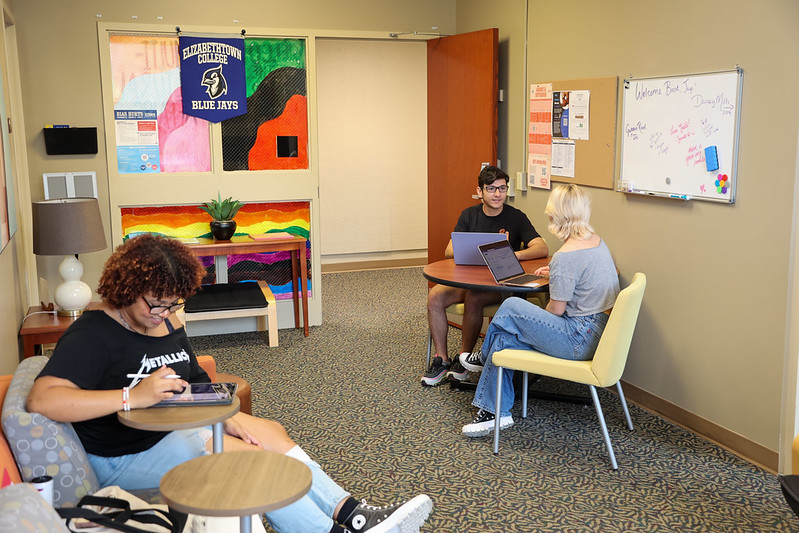
The Center for Multicultural Affairs, located on the second floor of the Baugher Student Center (BSC), is a welcoming space dedicated to supporting students from all backgrounds. It offers a safe environment for dialogue, reflection, and collaboration, while fostering meaningful connections through support networks and mentorship opportunities.
Through its programming and presence, this space on campus provides a central hub for building a campus community rooted in understanding, respect, and shared growth.
Resources for Current Students
We are committed to ensuring that all students have the support, guidance, and resources they need to navigate their college experience successfully. Our team members serve as advocates, mentors, and connectors, providing direct support to students and student groups while facilitating collaboration across campus.
Etown's Intercultural Board is made up of leaders from several multicultural and identity-based clubs and organizations on campus. This collaborative platform meets every two weeks, with the Director, Dean of Students, and other administrative officials present as needed. During these meetings, board members exchange information on planned events and projects organized by their various groups in the coming weeks. The meetings provide an opportunity for members to contribute valuable thoughts and lend assistance through constructive conversations. Additionally, these discussions provide a forum for student leaders to express their views on the current environment, creating continuous dialogue to improve the overall campus climate.
The Ubuntu Mentorship Program at Elizabethtown College fosters a strong network of support, guidance, and empowerment for first-year students as they transition into college life. Rooted in the philosophy of “I am because we are,” the program ensures that every student has access to a dedicated community of mentors, including upper-level students, faculty, staff, and alumni, who provide encouragement and resources for academic, social, and personal success.
The Ubuntu Mentorship Program plays a crucial role in ensuring that all students feel valued, supported, and prepared to thrive at Elizabethtown College. Through mentorship, advocacy, and relationship-building, the program upholds the values of peace, non-violence, social justice, and human dignity—creating a campus culture where every student has the opportunity to grow and succeed.
We are committed to fostering a campus environment where all students, faculty, and staff can connect, learn, and engage in meaningful dialogue. Through a variety of educational programs, events, and activities, we strive to build relationships, promote understanding, and encourage active participation in shaping a welcoming and supportive community.
Elizabethtown College understands that being a non-native English speaker can present unique challenges in your academic pursuits. To ensure that you have the best possible learning experience, the College offers Language Modification services to courses that may include extended time to submit tests and assignments, access to supplementary materials such as translation services, or other modifications that can help you succeed in your courses.
Mosaic Unbound is a monthly gathering co-hosted by the Office of Student Opportunity, Access and Engagement and the High Library, providing students, faculty, and staff with a space to explore literature, music, and art that highlight themes of social responsibility, human dignity, and justice. Each session features selected works aligned with significant cultural and historical moments, offering an opportunity for thoughtful discussion and reflection. Participants receive content excerpts in advance to foster deeper engagement, and all members of the campus community are encouraged to join. Through creative expression and open dialogue, Mosaic Unbound promotes shared learning, connection, and a greater understanding of lived experiences.
Ujima Dialogue is a biweekly forum that fosters open and meaningful discussions on topics related to access, opportunity, and justice. Rooted in the Kwanzaa principle of "collective work and responsibility," this series provides a space for students, faculty, and staff to engage in thoughtful conversations about current issues shaping our community. Topics are announced a few days in advance through the Jays App and the office Instagram page, ensuring participants have the opportunity to reflect before joining the discussion. Through open dialogue and shared perspectives, Ujima Dialogue encourages collaboration, critical thinking, and a deeper understanding of our collective role in building a more just and connected society.
Safe Zone trainings provide valuable educational experiences centered on LGBTQ+ identities, gender, and sexuality. While establishing a more welcoming inclusive environment, these workshops encourage participants to explore their own biases, assumptions, and privileges. These trainings occur annually, during the spring semester, and use The Safe Zone Project curriculum. The program provides attendees with extensive information on LGBTQIA+ issues while also developing a strong network of allies within the Etown community. Students, faculty members, and staff are all welcome.
Unlock the world of equity-focused design thinking with our recurrent online training, which is available all year through the Canvas course platform. This course, designed for emerging leaders, equips students to engage in inclusive learning, confront biases, and transform power dynamics. We dive into the fundamentals of design thinking to gain a thorough understanding of how to create just equitable and welcoming environments by embracing shared values. Continue this transformative journey to strengthen your capacity for leadership while advocating for civil rights, access, and opportunity.
Elizabethtown College is committed to providing our students a quality education that will help them develop leadership skills, better their well-being and connectedness, and enhance relationship building. The Etown Blue Print program provides students with a roadmap for this journey, acts as a bridge between campus and local communities, fosters life skills, and creates professional connections that extend outside the classroom.
Blue Print ProgramPolicies & Definitions
Elizabethtown College aligns its institutional commitments with the principles set forth by national higher education organizations, including those outlined by the Association of American Colleges and Universities (AAC&U). These guiding principles ensure that our academic environment is free from discrimination, promotes fairness, and upholds the right to access education without systemic barriers.
Opportunity
Opportunity is the intentional effort to create pathways that allow all individuals — particularly those from historically underrepresented backgrounds — to participate fully in educational programs, leadership roles, and career advancement. By removing systemic obstacles and expanding access to academic and co-curricular engagement, Elizabethtown College ensures that every student has the chance to thrive and succeed.
Access
Access is the commitment to ensuring that all students, regardless of background, ability, or financial means, have the necessary support to fully participate in higher education. This includes closing achievement gaps, ensuring physical and technological accessibility, and providing equitable resources that support student success.